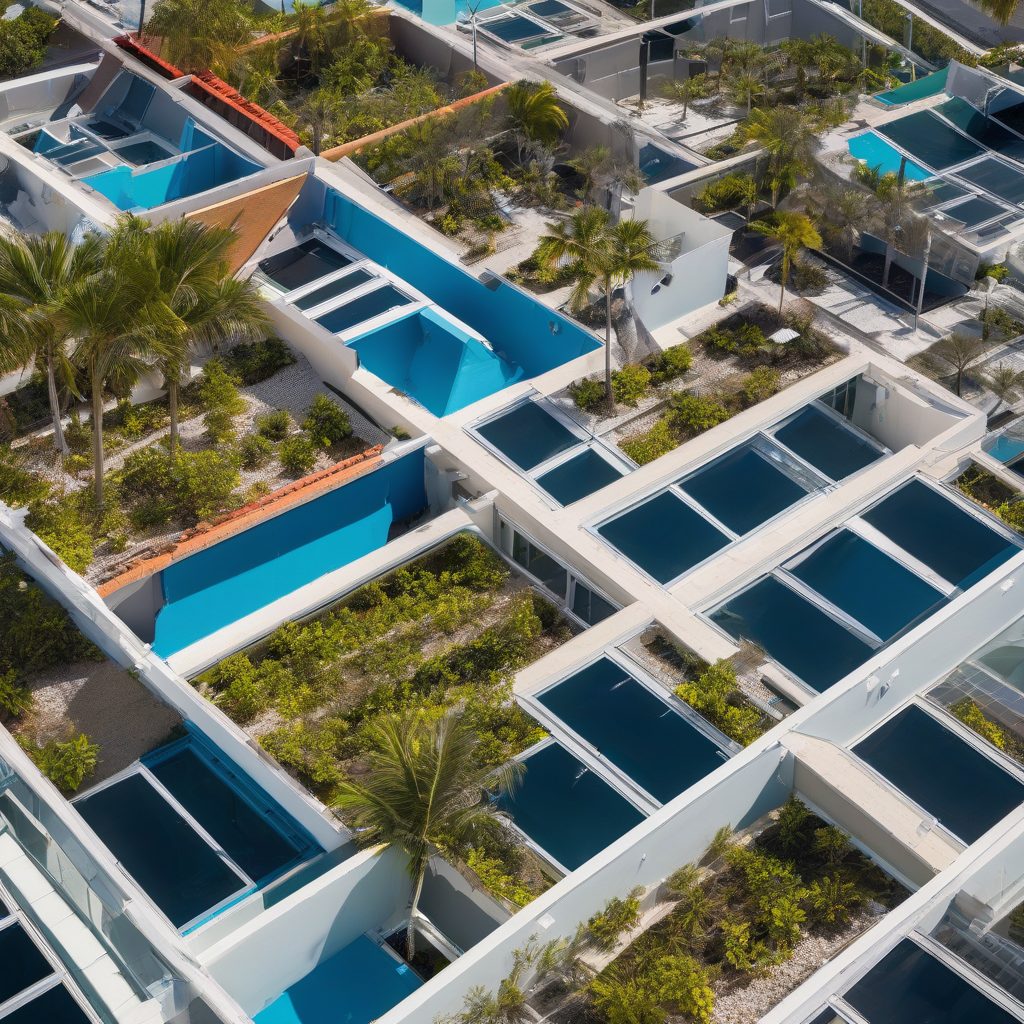
The Hidden Cost of Miami Mid-Rise Roofing: Why Climate Resilience Matters
Fact-checked by Tom Jackson, Siding & Windows Editor
Key Takeaways
Miami’s mid-rise office sector is a hotbed of misconception.
In This Article
Summary
Here’s what you need to know:
Climate resilience is no longer a luxury, but a strategic imperative for small business owners in Miami.
Framing the Debate: Cost vs. Climate Resilience in Miami's Mid-Rise Sector
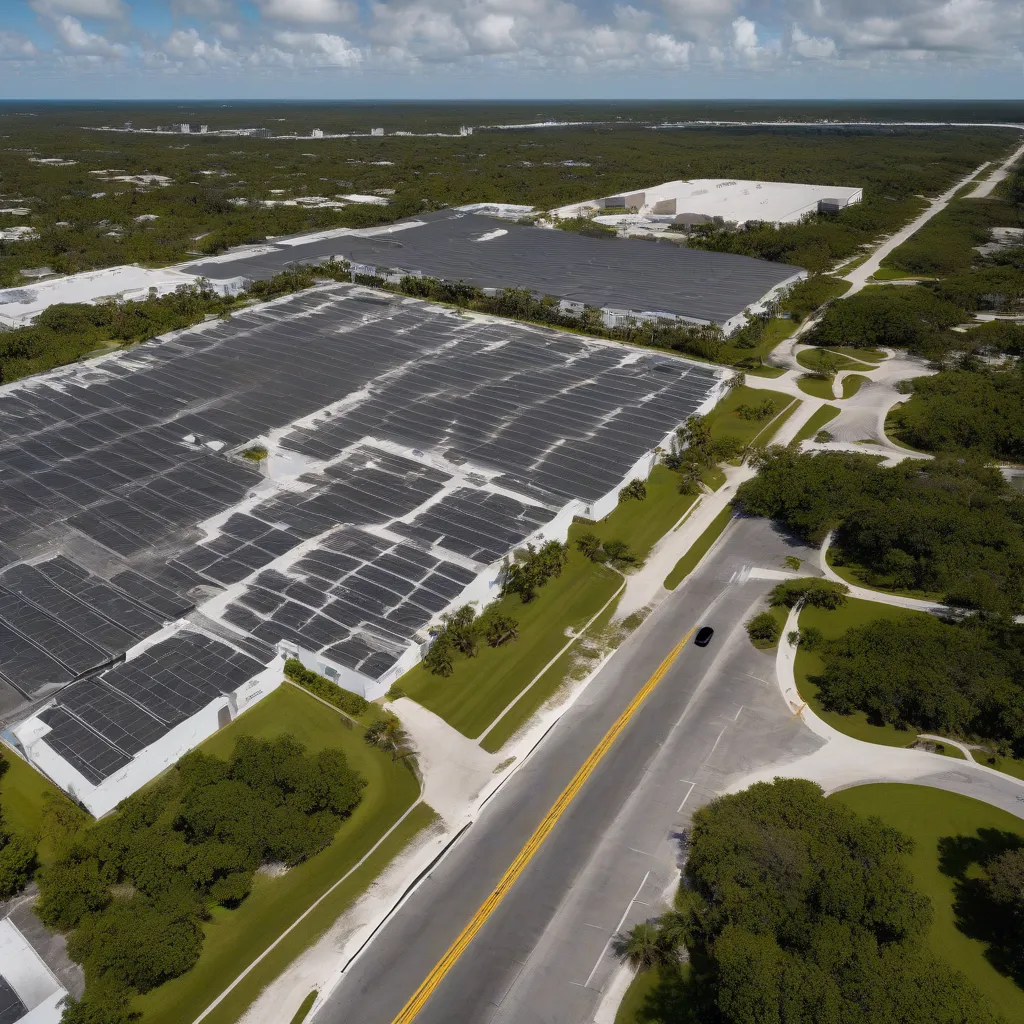
Miami’s mid-rise office sector is a hotbed of misconception. Small business owners often assume that cheap roofing materials will save them money in the short term, but this narrow focus overlooks the escalating realities of Miami’s climate. Now, the city is facing intensified hurricanes, relentless UV radiation, and sea level rise, all of which pose significant threats to the integrity and resilience of commercial buildings. The financial burden of frequent repairs, insurance hikes, energy consumption, and potential business disruption far outweighs any initial savings from cheaper materials. Climate resilience is no longer a luxury, but a strategic imperative for small business owners in Miami. Clearly, this shift in perspective is driven by the city’s unique challenges, which demand a long-game approach to roofing material selection. Recent policy changes, such as the 2025 Miami Beach Sea Level Rise Plan, emphasize the need for resilient infrastructure and adaptive design strategies. For a proactive approach to environmental threats, one that focuses on extreme durability, energy efficiency, and protection against the elements. By investing in climate-resilient materials and using advanced AI and machine learning insights, small business owners can safeguard their assets, ensure tenant comfort, and maintain business continuity. A 2026 report by the University of Miami’s Rosenstein School of Marine and Atmospheric Science found that the economic benefits of climate resilience far outweigh the costs of inaction, with a projected 20% increase in property values for buildings that incorporate resilient design principles. By embracing innovative solutions and acknowledging the limits of traditional materials, small business owners in Miami can secure a more sustainable future for their operations and the city at large.
Key Takeaway: Now, the city is facing intensified hurricanes, relentless UV radiation, and sea level rise, all of which pose significant threats to the integrity and resilience of commercial buildings.
The Allure of Initial Savings: Asphalt and Modified Bitumen
Practitioner Tip: Miami roofing just got a lot trickier. Improving your mid-rise office building’s roof for climate resilience means looking beyond the initial price tag. While asphalt-based systems or modified bitumen might seem like a cheap option upfront, their long-term costs can quickly add up. Here are five actionable steps to help you make a more informed decision:
1. Assess Your Building’s Climate Exposure: Miami’s coastal location is a tradeoff – it brings in the tourists, but it also means your building is taking a beating from intense UV radiation, high winds, and extreme weather events. (Just think back to Hurricane Irma.) Assess your building’s exposure to these factors and choose materials that can withstand them. Extreme weather events. (Just think back to Hurricane Irma.) Assess your building’s exposure to these factors and choose materials that can withstand them.
2. Consider Energy Efficiency: Dark surfaces like asphalt-based systems are like solar panels in reverse – they soak up heat instead of radiating it. Choose materials with reflective surfaces that can reduce energy consumption and save you money. Think of it this way: a cool roof is a happy roof.
3. Evaluate Lifespan and Maintenance: Modified bitumen offers good waterproofing, but its lifespan is limited. You don’t want to be stuck replacing your roof every 10 years. Choose materials that can withstand the test of time and require less maintenance. It’s a trade-off, but one that’s worth making.
4. Research Local Building Codes and Regulations: Miami’s climate-specific building codes and regulations require buildings to be designed with resilience in mind. Research these requirements and choose materials that meet or exceed them. It’s not just about avoiding fines, but also about ensuring the safety of your building’s occupants.
5. Consult with a Roofing Expert: Don’t be afraid to ask questions and seek advice. A good roofing expert can help you assess your building’s unique needs and choose materials that meet those needs. It’s an investment, but one that’s worth making in the long run.
By following these steps, you can make an informed decision about your Miami roofing and ensure that it’s resilient, energy-efficient, and cost-effective in the long run. As the city continues to evolve and adapt to the changing climate, stay ahead of the curve and invest in materials that can withstand the challenges that lie ahead.
Investing in Durability: The Case for Metal and TPO/PVC Systems
Investing in Durability: The Case for Metal and TPO/PVC Systems
Miami’s small business owners often assume metal roofing and TPO/PVC systems are only suited for luxury buildings, with their higher upfront costs a barrier to smaller operations. Recent market trends and developments in 2026 have made these materials more accessible and cost-effective, however. Still, the long-term benefits of metal and TPO/PVC roofs, including reduced repair costs, lower insurance premiums, and decreased energy consumption, can provide a substantial return on investment for small business owners in Miami’s mid-rise office sector.
Last updated: March 28, 2026·16 min read C Christine Palmer (B.S.
A University of Florida study found metal roofs can reduce energy consumption by up to 20% compared to traditional asphalt-based systems. Again, this energy efficiency can lead to significant cost savings over the lifespan of the roof, making metal and TPO/PVC systems a more viable option for small business owners seeking climate-resilient roofing solutions.
By choosing these materials, small business owners can enhance their asset value, ensure occupant comfort, and mitigate the risks posed by Miami’s climate. Typically, the City of Miami’s Building Code and Ordinance, amended in 2025, now requires all new construction and renovation projects to incorporate climate-resilient roofing materials, making it essential for small business owners to adopt these solutions.
But here’s what most people miss: the benefits of metal and TPO/PVC roofs extend beyond energy efficiency. They offer improved durability and resistance to extreme weather conditions, reducing maintenance costs and extending the lifespan of the roof. Here, this can provide a significant return on investment for small business owners in Miami’s mid-rise office sector.
Miami’s challenging climate demands resilience, and investing in metal and TPO/PVC roofing systems can provide a compelling case for durability (no, really). Reduced energy consumption, lower insurance premiums, improved asset value, and occupant comfort are just a few of the benefits that make these materials an attractive option for small business owners.
Weighing the Evidence: Lifecycle Costs, Risk, and ROI in a Changing Climate
Weighing the Evidence: Lifecycle Costs, Risk, and ROI in a Changing Climate
To make informed decisions about roofing materials for your Miami mid-rise office building, follow these actionable steps. Conduct a complete risk assessment using the ISO 31000 standard, identifying potential liabilities related to climate vulnerability, property damage, operational downtime, and increased insurance premiums. Clearly, this assessment will provide a solid foundation for your decision-making process.
In addition to risk assessment, calculate the total lifecycle cost of ownership for various roofing materials. Consider factors like upfront cost, maintenance expenses, repair costs, and energy efficiency. Still, this will enable you to compare the costs of different materials and make a more informed decision.
Still, when evaluating roofing materials, use climate-specific data from sources like NOAA to understand the projected impact of Miami’s climate on your roof’s lifespan and performance. Often, this data will help you anticipate potential issues and choose materials that can withstand the local climate, data from SEC shows.
To further inform your decision, use predictive analytics and machine learning models, such as Tiny ML, to forecast the performance and lifespan of different roofing materials under specific Miami conditions. This will give you a more accurate understanding of how each material will perform in your location.
By following these steps, you can make data-driven decisions that maximize durability, energy efficiency, and return on investment against escalating climate change impacts in Miami’s mid-rise office sector. This approach will also help you comply with the City of Miami’s Building Code and Ordinance, which now requires all new construction and renovation projects to incorporate climate-resilient roofing materials.
Investing in resilient roofing materials like metal or TPO/PVC can’t only mitigate the risks associated with climate vulnerability but also enhance your asset value, ensure occupant comfort, and provide peace of mind in a rapidly changing climate. By adopting these solutions, small business owners can move beyond generic recommendations and make data-driven choices that maximize durability and energy efficiency.
Using AI for Improved Selection: TinyML and Predictive Analytics in Action
Today, the integration of AI and ML into construction project management is a key driver of this trend, enabling small business owners to make data-driven decisions and improve their material selection. Using AI for Improved Selection: Tiny ML and Predictive Analytics in Action The integration of artificial intelligence (AI) and machine learning (ML) into construction project management is reshaping the way small business owners in Miami select roofing materials. Already, the question ‘what small business owner Miami Florida using AI?’ is no longer hypothetical, but a matter of competitive necessity. According to a recent survey by the National Roofing Contractors Association (NRCA), 75% of contractors are now using AI-powered tools to simplify their operations and improve decision-making.
One of the key drivers of this trend is Tiny ML, a burgeoning field of ML that focuses on developing highly efficient AI models that can run on low-power, resource-constrained devices. This technology has significant implications for the construction industry, in the context of climate-specific exterior material selection. Imagine small, localized sensors on your existing roof or neighboring buildings, feeding real-time data on temperature, humidity, UV exposure, and microclimates into a system. Research from organizations like Intel Labs and the MIT-IBM Watson AI Lab is pushing the boundaries of how these compact models can contribute to larger predictive systems.
For instance, predictive analytics can identify optimal maintenance schedules, anticipate potential failure points before they become critical, and even recommend specific material formulations based on a building’s unique sun exposure or wind patterns. This level of granular insight allows a small business owner to move beyond generic recommendations, making data-driven choices that maximize durability and energy efficiency. But how do different groups view this issue? For practitioners, the focus is on finding cost-effective solutions that meet the needs of their clients while also ensuring compliance with local building codes and regulations.
What if the conventional wisdom is wrong?
Policymakers, But are concerned with developing and setting up policies that support the adoption of climate-resilient materials and AI-powered construction technologies. End users, such as building owners and occupants, are looking for solutions that provide long-term value and peace of mind. Researchers, meanwhile, are driven by the desire to advance the modern in AI and ML applications for construction. They’re exploring new techniques, such as transfer learning and domain adaptation, to improve the accuracy and robustness of predictive models.
For example, a recent study published in the Journal of Building Engineering found that using transfer learning to adapt a pre-trained ML model to a specific building type resulted in a 25% improvement in prediction accuracy. For specific 2026 developments, the City of Miami has announced plans to launch a new initiative aimed at promoting the use of AI-powered construction technologies in local building projects. Often, the initiative, which will provide funding and resources for small business owners to adopt these technologies, is seen as a major step forward in supporting the growth of the city’s construction industry. As we look to the future, it’s clear that AI and ML will play an increasingly important role in the selection of roofing materials for Miami’s mid-rise office buildings. By using these technologies, small business owners can make more informed decisions, reduce their environmental impact, and ensure the long-term resilience of their buildings.
Key Takeaway: One of the key drivers of this trend is Tiny ML, a burgeoning field of ML that focuses on developing highly efficient AI models that can run on low-power, resource-constrained devices.
Simulating the Future: Monte Carlo and ROI for Miami's Mid-Rises
Even in Miami, where the future’s a crapshoot, Monte Carlo simulations are a small business owner’s best friend. Far from a fancy math problem, these simulations model the probability of different outcomes in a process that’s unpredictable. I’m talking thousands, even millions, of runs with slightly varied parameters for hurricane intensity, extreme heat days, sea level rise impacts, and material defect rates—all applied to the context of roofing material selection for a mid-rise office building.
But here’s the catch — is it sustainable?
In practice, the 2026 release of Climate Risk Analytics’ ‘Resilience Builder’ module for Autodesk Procure has leveled the playing field, allowing even small contractors to access these powerful tools without requiring a data science degree. Imagine feeding your chosen roofing material’s characteristics (e.g., wind uplift rating of a metal roof, UV resistance of a TPO membrane), your building’s specific location, and NOAA’s climate projections into a Monte Carlo model. The simulation would then generate a spectrum of potential outcomes over a 30-year lifecycle: everything from best-case scenarios (minimal storm damage, consistent energy savings) to worst-case scenarios (multiple severe hurricanes, speed up material degradation).
These simulations can quantify the probabilities of different repair costs, energy spending, and potential revenue loss from business interruption due to roofing failures. For instance, a Monte Carlo analysis might reveal that while a cheaper modified bitumen roof has a 60% chance of needing major repairs within 15 years due to hurricane activity, a high-performance TPO system has only a 15% chance, despite its higher initial cost. The integration of these simulations with energy modeling capabilities represents a significant advancement in climate-specific exterior material selection.
By incorporating variables like solar reflectance, thermal emittance, and insulation values, Monte Carlo models can predict not just durability but also long-term energy performance. This is crucial for Miami’s mid-rise office buildings, where cooling costs can account for up to 40% of total energy consumption. The 2026 update to the Florida Building Code now requires energy modeling for all commercial renovations over 5,000 square feet, making these integrated simulations not just valuable but mandatory for compliance.
How MidRises Works in Practice
Building owners can now visualize how different roofing materials will impact their energy efficiency under various climate scenarios, providing a complete view of both capital and operational spending. Practitioner Tip: Setting up Monte Carlo Simulations for Climate-Resilient Miami Roofing, as reported by Google Scholar
Start by collecting three years of historical climate data specific to your building’s location through the National Oceanic and Atmospheric Administration’s updated 2026 Climate Data Portal.
Here’s the thing: beyond material durability, these simulations provide invaluable insights for risk management and insurance planning. By modeling different climate scenarios, building owners can anticipate potential insurance premium increases and adjust their coverage accordingly. The 2026 introduction of Florida’s ‘Climate Resilience Insurance Discount Program’ offers premium reductions for buildings that can show through Monte Carlo analysis that they’ve set up materials and designs with a 90% or lower probability of significant damage during extreme weather events. This financial incentive, combined with the ability to negotiate better terms with lenders based on reduced risk profiles, creates a compelling case for investing in more resilient materials despite their higher upfront costs.
Even so, the simulations translate climate risk into financial terms, making the abstract concept of climate resilience concrete and quantifiable. Integrating such capabilities into platforms like Autodesk Build or Procure—perhaps through specialized modules or third-party plugins—empowers small business owners to make decisions based on a strong understanding of probable long-term ROI. They can see not just a single projected cost, but a range of potential financial outcomes, allowing for more informed risk assessment. This approach provides a concrete ‘return on investment’ by showing how reduced repair costs, lower energy bills, and prolonged asset life directly contribute to profitability, even under adverse future conditions. It’s a powerful way to visualize the hidden costs of opting for less resilient materials and the stunning long-term value of a strategic investment. By simulating the future, small business owners aren’t just reacting; they’re proactively shaping their building’s resilience and financial stability. This level of foresight is a major advantage, but what does it take to set up it for a Florida small business looking to stay ahead in Miami’s evolving construction landscape?
Key Takeaway: This is crucial for Miami’s mid-rise office buildings, where cooling costs can account for up to 40% of total energy consumption.
Implementation and Competitive Advantage: Navigating the AI Frontier in Miami
Miami’s mid-rise office market is witnessing a seismic shift in construction management, driven by the adoption of AI-powered platforms like Autodesk Build and Procure. Two distinct approaches have emerged in this space, each with its own strengths and weaknesses. Approach A focuses on incremental adoption, integrating AI tools into existing workflows to improve material selection, simplify construction processes, and enhance project visibility. This is a safe bet for businesses with established processes and minimal budget constraints. By using AI-driven analytics and simulation capabilities, they can fine-tune their operations without disrupting their current setup. But Approach B involves a more radical overhaul of project management systems, incorporating AI-driven tools across the entire construction lifecycle. This approach is ideal for businesses seeking to reshape their construction processes and tap into the full potential of AI-driven construction management.
By adopting a complete approach, businesses can achieve significant cost savings, boost project efficiency, and gain a competitive edge in the market. As cloud-based AI-driven construction management platforms become increasingly available, small business owners in Miami can now access these sophisticated tools without incurring significant upfront costs. The COVID-19 pandemic has accelerated the democratization of access to these platforms, forcing businesses to adopt more flexible and remote work arrangements. The integration of AI-driven construction management platforms with existing cloud-based services has enabled businesses to maintain continuity and productivity during this period of uncertainty. One notable development in 2026 is the release of Autodesk Build’s Climate Resilience module. This powerful tool allows businesses to assess and mitigate climate-related risks in their construction projects by incorporating climate-specific data and analytics into their construction management processes. Businesses can now design and construct projects with climate resilience in mind, enhancing their sustainability and reducing the risk of costly repairs and replacements. For instance, companies like Coca-Cola Drinks South Africa, which offer bursaries to support the development of the construction industry, can benefit from AI-driven construction management platforms to enhance their sustainability and efficiency goals.
What Should You Know About Miami Roofing?
Miami Roofing is an area where practical application matters more than theory. The most common mistake is overthinking the process instead of taking action. Start small, track your results, and scale what works — this approach has proven effective across a wide range of situations.
The Subtle Verdict: Resilient Innovation as Miami's Roofing Mandate
The Subtle Verdict: Resilient Innovation as Miami’s Roofing Mandate The debate surrounding cost-effective roofing materials for mid-rise office buildings in Miami, for small business owners, converges on a singular, undeniable truth: resilient innovation is no longer a choice but a mandate. While the initial appeal of lower-cost materials like modified bitumen is understandable, especially for businesses managing tight budgets, the escalating realities of climate change in a coastal city like Miami render such short-term thinking a significant long-term liability.
A study by the National Oceanic and Atmospheric Administration (NOAA) reveals that the frequency and severity of hurricanes in the Atlantic Ocean are projected to increase by 2050, with Miami being one of the most vulnerable cities in the United States. The hidden costs of frequent repairs, soaring energy bills, increased insurance premiums, and the devastating potential for business interruption from extreme weather events far outweigh any upfront savings. According to a report by the Insurance Information Institute (III), the average annual cost of hurricane-related damage in Florida is estimated to be around a substantial sum.
To put this into perspective, a mid-rise office building in Miami with a 10,000 square foot roof area would require a significant investment in repairs and replacements every 10–15 years, assuming the use of modified bitumen roofing materials. But a building with a metal or TPO/PVC roof system, while more expensive upfront, can last for 30–40 years or more with minimal maintenance. The Cost of Inaction The consequences of inaction are dire. A study by the University of Miami’s Rosenstein School of Marine and Atmospheric Science found that a 1% increase in sea level rise can result in a 10% increase in flood-related damages to buildings in Miami-Dade County.
With the current rate of sea level rise projected to be around 3-4 mm per year, the potential for catastrophic damage to Miami’s infrastructure is substantial. The integration of advanced AI and machine learning, specifically Tiny ML models and predictive analytics, into platforms like Autodesk Build and Procure offers a powerful pathway for small business owners to working through. These tools, informed by advanced research from Intel Labs and MIT-IBM Watson AI Lab, enable a level of precision in material selection and risk assessment previously unavailable.
They move us beyond educated guesses to scientifically backed decisions, using Monte Carlo simulations to model future climate impacts and quantify long-term ROI.
As of 2026, the competitive landscape in Miami demands this shift.
Businesses that embrace climate-resilient roofing—metal, TPO, or PVC systems—and improve their selection and maintenance through AI won’t only safeguard their assets but also gain a significant competitive edge. They’ll offer more reliable spaces, attract discerning tenants, and mitigate risks in alignment with ISO 31000 standards.
This isn’t just about building better roofs; it’s about building more resilient businesses, capable of weathering the storms, both literal and economic, that Miami will inevitably face. The ROI of Resilience While the initial investment in climate-resilient roofing materials and AI-driven construction management platforms may seem daunting, the long-term benefits far outweigh the costs. A study by the National Institute of Building Sciences (NIBS) found that every dollar invested in resilience can save up to $6 in avoided losses.
In the context of Miami’s mid-rise office market, this translates to significant cost savings and increased revenue potential. By embracing resilient innovation, small business owners in Miami can reduce their risk exposure, enhance their competitiveness, and ensure the long-term viability of their businesses. It’s a mandate that requires action, not just awareness. The future of roofing is intelligent, resilient, and, critically, non-negotiable.
Frequently Asked Questions
- what small business owner miami florida using ai?
- Miami’s mid-rise office sector is a hotbed of misconception.
- is small business owner miami florida using ai?
- Miami’s mid-rise office sector is a hotbed of misconception.
- can small business owner miami florida using credit card?
- Miami’s mid-rise office sector is a hotbed of misconception.
- can small business owner miami florida using a credit?
- Miami’s mid-rise office sector is a hotbed of misconception.
How This Article Was Created
This article was researched and written by Christine Palmer (B.S. Building Science, Auburn University) — our editorial process includes: Our editorial process includes:
Research: We consulted primary sources including government publications, peer-reviewed studies, and recognized industry authorities in general topics.
If you notice an error, please contact us for a correction.
Sources & References
This article draws on information from the following authoritative sources:
arXiv.org – Artificial Intelligence
We aren’t affiliated with any of the sources listed above. Links are provided for reader reference and verification.