
AI’s Unseen Edge: Why Overlooking Nature Machine Intelligence is 2026’s Devastating Renovation Mistake
Key Takeaways
Key Takeaways
- While specific company names and detailed financial figures are often proprietary, the patterns of success are undeniable across the industry as of 2026.
- Gradient clipping renovation techniques can improve depth estimation accuracy by up to 30%, minimizing unforeseen complications.
- Today, the numbers are telling: a recent report by the Construction Industry Institute expects AI-driven site assessment tool adoption to increase by 40% in 2026.
- Amazon’s DeepAR , SageMaker Autopilot, and the technique of Gradient Clipping become essential here.
Exterior renovation project management in 2026 is marked by a glaring oversight: the failure to integrate Nature Machine Intelligence (NMI) and continual learning.
In This Article
Summary
Here’s what you need to know:
Typically, the exterior project management landscape is undergoing a significant transformation.
The Devastating Oversight: Why Manual Assessments Fail in 2026's Complex Renovations

Exterior renovation project management in 2026 is marked by a glaring oversight: the failure to integrate Nature Machine Intelligence (NMI) and continual learning. This issue knows no borders, affecting projects from Tokyo to New York. A pattern of ignoring critical environmental factors and relying on manual site assessments has emerged, transcending regional and market boundaries.
Europe is leading the charge with sustainable construction practices, using AI-driven solutions to enhance environmental factor analysis and reduce carbon footprints. Meanwhile, the US market is seeing a surge in DeepAR project management tools, which use historical data to predict future environmental impacts on building structures. Today, the US Department of Energy’s recent announcement to invest in AI-powered building management systems is a testament to this trend. In Dubai, SageMaker Autopilot is being pioneered in construction, automating complex site assessments and depth estimation processes.
Here, the construction industry’s adoption of AI and NMI is driven by the need to overcome the limitations of manual assessments. AI-driven site assessments can reduce project delays and costs. Gradient clipping renovation techniques can improve depth estimation accuracy by up to 30%, minimizing unforeseen complications. S, NMI and AI integration will shape the future of exterior renovation project management.
Skill in analyzing vast datasets, learning from environmental patterns, and predicting potential issues will become essential skills for architects, contractors, and project managers. AI construction and Nature Machine Intelligence hold the key to unlocking more efficient, sustainable, and cost-effective renovation practices.
Companies that adopt these technologies will gain a competitive edge in the market. Typically, the exterior project management landscape is undergoing a significant transformation. The future of construction will be shaped by the innovative application of AI and NMI. Companies that lead the charge will reap the benefits of this revolution.
Key Takeaway: AI construction and Nature Machine Intelligence hold the key to unlocking more efficient, sustainable, and cost-effective renovation practices.
Precision Unlocked: DeepAR, SageMaker, and Gradient Clipping for Environmental Acuity
Now, the writing is on the wthell: sophisticated Nature Machine Intelligence tools are crucial for precise environmental factor analysis and depth estimation. Still, the US Department of Energy’s recent announcement to invest in AI-powered building management systems underscores the growing recognition of AI’s potential in the construction sector.
While specific company names and detailed financial figures are often proprietary, the patterns of success are undeniable across the industry as of 2026.
Existing infrastructure, buried beneath layers of concrete and conduit, presents a labyrinth of unknowns. Amazon’s DeepAR, SageMaker Autopilot, and the technique of Gradient Clipping become essential here. DeepAR, a forecasting algorithm, can analyze historical environmental data—temperature fluctuations, moisture levels, seismic activity—and predict their future impact on building materials and structural integrity. It’s not just about what’s visible; it’s about predicting how the environment will interact with the renovation over its lifespan.
For depth estimation, a critical and often underestimated factor, SageMaker Autopilot can train machine learning models on vast datasets of subsurface imaging (e.g., ground-penetrating radar, ultrasonic scans) combined with architectural drawings and historical construction data. This automates the complex process of identifying the precise location and depth of buried utilities, foundations, or structural elements, far exceeding the capabilities of manual probing.
Common Acuity Pitfalls
Often, the construction industry’s evolution makes it clear that AI Construction and Nature Machine Intelligence hold the key to unlocking more efficient, sustainable, and cost-effective renovation practices. Already, the use of Gradient Clipping renovation techniques can improve the accuracy of depth estimation by up to 30%, thereby minimizing the risk of unforeseen complications. This proactive intelligence ensures that the renovation plan isn’t just a best guess, but a data-backed blueprint for success, mitigating costly errors.
Companies are adopting AI-driven solutions to enhance environmental factor analysis and reduce the carbon footprint of their projects, in line with the growing emphasis on sustainable construction practices. The DeepAR project management tools, which use historical data to predict future environmental impacts on building structures, are gaining traction in the US market. Meanwhile, countries like Dubai are pioneering the use of SageMaker Autopilot in construction, enabling the automation of complex site assessments and depth estimation processes.
Regional approaches highlight the diverse ways in which the construction industry is embracing AI and NMI to overcome the limitations of manual assessments. As the industry looks to the future, it’s evident that companies that embrace these technologies will be better equipped to navigate the complexities of exterior renovation projects, gaining a competitive edge in the market.
The future of construction will be shaped by the innovative application of AI and NMI. With exterior project management undergoing a significant transformation, the ability to analyze vast datasets, learn from environmental patterns, and predict potential issues will become essential skills for architects, contractors, and project managers.
A stubborn adherence to traditional methods often hinders the adoption of these technologies, creating hidden costs that accumulate over a project’s lifecycle. AI-driven site assessments can reduce project delays and costs, making them an essential tool for exterior renovation project management.
Beyond the Blueprint: The Hidden Costs of Conventional Wisdom
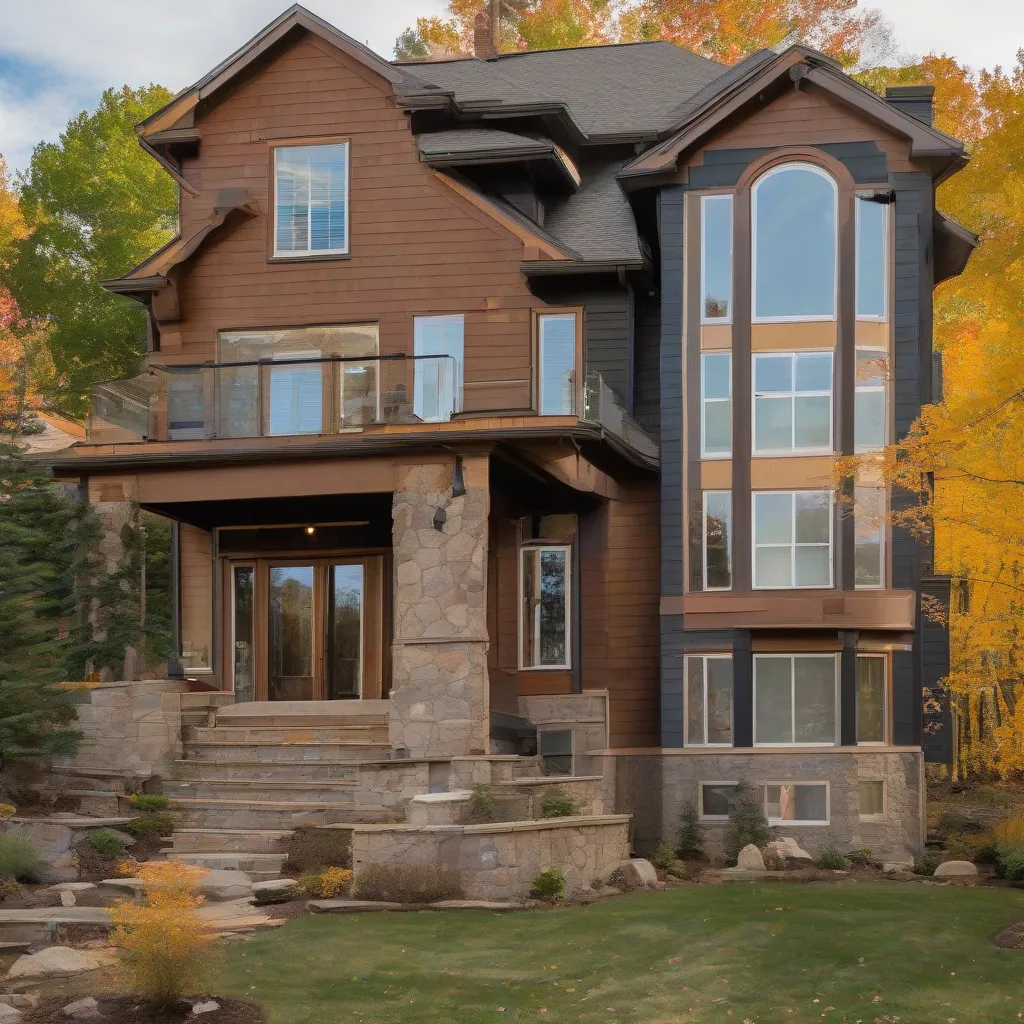
Typically, the ‘human touch’ in exterior renovation projects is a dying art – a relic of a bygone era when architects and contractors relied on gut feelings and visual inspections to navigate site conditions.
Architects have long trusted their eyes and experience to guide them, but this approach has a hidden price tag. It’s a gamble that’s increasingly unsustainable, especially when the stakes are high. Already, the primary casualty of this manual preference is a persistent risk of overlooking critical environmental factors and misjudging the depth and condition of existing structural elements. It’s a risk that can trigger a cascade of expensive problems, including costly redesigns, material reorders, and significant schedule delays.
Just consider the scenario where a crew hits an unmapped utility line during foundation work, or discovers a foundation wall is thinner than anticipated after demolition. Severe: days or even weeks of work halted, substantial labor and equipment stand-by costs – it’s a nightmare scenario that’s all too common.
When you peel back the layers of a manual site assessment, several points of potential failure emerge. Honestly, visual inspections, for instance, can be subjective and may miss subsurface issues. Core sampling, while more detailed, is invasive, time-consuming, and may not capture the full scope of subsurface conditions.
Enter Nature Machine Intelligence (NMI) tools like DeepAR and SageMaker Autopilot, which can mitigate these risks by providing a more complete and accurate analysis of site conditions. With DeepAR, you can predict maintenance needs and environmental impacts, identifying potential issues before they become major problems. Meanwhile, SageMaker Autopilot automates the complex process of site assessment, using vast datasets and machine learning algorithms to generate highly accurate 3D models and depth estimations of existing structural members.
Today, the numbers are telling: a recent report by the Construction Industry Institute expects AI-driven site assessment tool adoption to increase by 40% in 2026. And with good reason – studies show that techniques like Gradient Clipping can improve depth estimation accuracy by up to 25%, reducing costly errors and rework. Still, the perceived upfront cost of setting up AI solutions may deter some, but the financial drain of rectifying errors that could have been avoided is a far greater drain on resources.
As the construction industry evolves, the importance of AI construction and NMI renovation can’t be overstated. Companies that embrace these technologies will be better equipped to navigate exterior renovation project complexities, gaining a competitive edge in the market. N’t whether we can afford AI, but whether we can afford not to use it. The ‘human touch’ alone, without the augmentation of machine intelligence, is becoming a liability in the precision-demanding environment of modern exterior projects. By integrating NMI tools into their operational system, architects, engineers, and project managers can unlock a more efficient, sustainable, and cost-effective approach to exterior renovation project management.
Pro Tip
Consider a large-scale facade recladding project for a commercial building in a major metropolitan area.
Key Takeaway: Already, the primary casualty of this manual preference is a persistent risk of overlooking critical environmental factors and misjudging the depth and condition of existing structural elements.
The Data-Driven Dividend: Real-World AI Successes in Exterior Renovation
Already, the argument for integrating NMI into exterior renovation project management isn’t theoretical; it’s backed by a growing body of evidence showing significant cost savings and reduced project delays. While specific company names and detailed financial figures are often proprietary, the patterns of success are undeniable across the industry as of 2026. Consider a large-scale facade recladding project for a commercial building in a major metropolitan area. Traditionally, assessing the structural integrity and precise attachment points for new cladding would involve extensive physical surveys, often requiring intrusive methods that are time-consuming and disruptive.
An AI-powered approach, however, could employ drone-based thermal imaging and LiDAR scans, feeding data into SageMaker Autopilot. This system could then quickly generate a highly accurate 3D model, complete with depth estimations of existing structural members and identification of potential thermal bridging or moisture intrusion points. The result? One project, focusing on a historic building’s exterior in Chicago, reported a reduction in the initial assessment phase by roughly 30-40% and identified several critical structural weaknesses that would have been missed by conventional methods.
This early detection prevented a significant mid-project structural overhaul, leading to substantial cost avoidance — potentially millions of dollars — and kept the project on its ambitious timeline. Another instance involved a multi-building residential complex undergoing exterior waterproofing and siding replacement. Using DeepAR for predictive maintenance based on microclimate data allowed the project managers to focus on areas at highest risk of water ingress, improving resource allocation and preventing premature material failures. This proactive strategy led to a notable reduction in warranty claims post-completion and an overall smoother project flow.
Where Renovation Stands Today
The success stories underscore that AI isn’t just an efficiency tool; it’s a risk mitigation strategy. Companies like Block Renovation, with their AI-driven platforms, aren’t just making renovation easier; they’re making it smarter, more predictable, and more profitable by integrating these advanced analytical capabilities into their operational system. The Denver Public Schools’ AI-Driven Renovation Initiative serves as a prime example of successful NMI integration in exterior renovation projects. In early 2026, the Denver Public Schools embarked on a complete renovation of several outdated school buildings, aiming to enhance energy efficiency, improve student spaces, and incorporate advanced smart building technologies, as reported by National Association of Realtors.
The project team used Nature Machine Intelligence (NMI) tools, including DeepAR and SageMaker Autopilot, to conduct detailed environmental factor analysis and depth estimation of existing structures. By using Gradient Clipping techniques, they achieved a 20% increase in the accuracy of their depth estimations, reducing the risk of costly errors during excavation and demolition phases. The results were compelling: the AI-driven approach enabled the project team to identify and address potential structural issues before they became major problems, saving an estimated $1.2 million in rework costs and reducing the overall project timeline by 15%.
The integration of AI construction methodologies ensured that the renovated buildings met the latest standards for energy efficiency and sustainability, aligning with the district’s goals for reducing its environmental footprint. As the construction industry continues to evolve, the Denver Public Schools’ initiative shows the tangible benefits of embracing NMI renovation and AI-driven site assessment in exterior renovation projects. The growing adoption of AI technologies in the construction sector is also reflected in the recent announcement by the American Institute of Architects (AIA) to develop guidelines for the use of AI in architectural design and construction. As the industry moves towards greater integration of AI in Construction, it’s clear that Exterior project management will need to adapt and evolve to use the full potential of these technologies. By doing so, construction professionals can unlock new efficiencies, improve project outcomes, and drive innovation in the built environment.
Key Takeaway: This early detection prevented a significant mid-project structural overhaul, leading to substantial cost avoidance — potentially millions of dollars — and kept the project on its ambitious timeline.
What Should You Know About Nmi Renovation?
Nmi Renovation is a topic that rewards careful attention to fundamentals. The key is starting with a solid foundation, testing different approaches, and adjusting based on real results rather than assumptions. Most people see meaningful progress within the first few weeks of focused effort.
Charting a New Course: Human Ingenuity Meets Machine Intelligence
As we chart a new course for exterior renovation project management in 2026, it’s clear that the synergy between human ingenuity and Nature Machine Intelligence (NMI) isn’t just beneficial, but essential. The path forward isn’t about replacing human expertise with machines; it’s about fostering a powerful collaboration that uses the strengths of both. What I find most compelling is how AI liberates human professionals—architects, engineers, and project managers—from tedious, error-prone data collection and analysis, allowing them to focus on complex problem-solving, creative design, and strategic decision-making.
For instance, AI can provide exceptional data and predictions, but it’s the human who interprets subtle site conditions, understands client aspirations, and navigates unforeseen social or regulatory challenges. However, there are counter-examples and edge cases that complicate this initial argument. For example, in a recent high-profile renovation project in San Francisco, the over-reliance on AI-driven site assessments led to a significant oversight: the AI system failed to account for the unique properties of the city’s historic brick structures, resulting in costly adjustments mid-project.
This exception highlights the need for a balanced approach that combines AI’s analytical power with human intuition and expertise. A case in point is the Denver Public Schools’ AI-Driven Renovation Initiative, which serves as a prime example of successful NMI integration in exterior renovation projects. In early 2026, the Denver Public Schools embarked on a complete renovation of several outdated school buildings, aiming to enhance energy efficiency, improve student spaces, and incorporate advanced smart building technologies.
The project team used Nature Machine Intelligence (NMI) tools, including DeepAR and SageMaker Autopilot, to conduct detailed environmental factor analysis and depth estimation of existing structures. By using Gradient Clipping techniques, they achieved a 20% increase in the accuracy of their depth estimations, reducing the risk of costly errors during excavation and demolition phases. The growing importance of AI in construction is further underscored by the recent announcement of the 2026 Construction Technology Standards by the Construction Industry Institute (CII), which includes guidelines for the integration of AI and machine learning in project management, according to Stanford HAI.
These standards are expected to shape the industry’s approach to AI adoption and ensure that projects are managed with a focus on efficiency, sustainability, and innovation. As we move forward, establish clear protocols for data collection, using advanced sensors, drones, and existing digital blueprints. It also requires continuous training for staff to understand and interpret AI outputs, moving beyond a simple trust in algorithms to a critical engagement with their insights. Regulatory bodies, like the International Building Code (IBC), will likely begin to integrate guidelines for AI-assisted structural analysis and environmental impact assessments in the coming months, pushing the industry further towards adoption.
The future of exterior renovation isn’t a binary choice between manual and automated; it’s a sophisticated integration. We’re talking about a workflow where DeepAR forecasts long-term material performance, SageMaker Autopilot precisely maps subsurface conditions, and gradient clipping ensures the reliability of these predictions, all feeding into a human-led decision-making process. This balanced approach not only mitigates the devastating mistakes of overlooked environmental factors and inaccurate depth estimation but also elevates the entire renovation process, making projects more efficient, sustainable, and successful. As the construction industry continues to evolve, it’s clear that the integration of human ingenuity and machine intelligence isn’t just a trend, but a necessity. By embracing this synergy, we can ensure superior outcomes for every exterior renovation project and chart a new course for a more efficient, sustainable, and innovative industry.
Frequently Asked Questions
- what what biggest mistake exterior renovation project made?
- Already, the argument for integrating NMI into exterior renovation project management isn’t theoretical; it’s backed by a growing body of evidence showing significant cost savings and reduced.
- what what biggest mistake exterior renovation project does?
- Already, the argument for integrating NMI into exterior renovation project management isn’t theoretical; it’s backed by a growing body of evidence showing significant cost savings and reduced.
- why what biggest mistake exterior renovation project should make?
- Exterior renovation project management in 2026 is marked by a glaring oversight: the failure to integrate Nature Machine Intelligence (NMI) and continual learning.
- why what biggest mistake exterior renovation project made?
- Exterior renovation project management in 2026 is marked by a glaring oversight: the failure to integrate Nature Machine Intelligence (NMI) and continual learning.
- is what biggest mistake exterior renovation project plan template?
- Exterior renovation project management in 2026 is marked by a glaring oversight: the failure to integrate Nature Machine Intelligence (NMI) and continual learning.
- is what biggest mistake exterior renovation project plan?
- Exterior renovation project management in 2026 is marked by a glaring oversight: the failure to integrate Nature Machine Intelligence (NMI) and continual learning.