7 Ways Smart Roofing Defies Climate Challenges in 2026
Key Takeaways
Key Takeaways
- The Growing Threat of Environmental Challenges to Homes Every 17 minutes, a home in the United States suffers significant damage from environmental factors.
- Future Directions: Integration and Scalability the next 5–10 years will see significant advancements in smart home protection systems.
- But climate change is speed up, and what worked in 2000 often fails in 2026.
- That’s 85 homes per day, 2,550 per month, and over 30,000 annually — and these numbers are climbing.
Frequently Asked Questions
In This Article
Summary
Here’s what you need to know:
Homeowners are driving the industry to innovate and adapt – and fast. Climate change is accelerating, and what worked 26 years ago often falls short today.
The stakes are high: weather conditions can change dramatically within hours, making proper installation techniques a non-negotiable.
Practitioners stress the importance of high-quality data and ongoing training and maintenance for AI systems – a crucial aspect of their work.
Frequently Asked Questions in Smart Roofing
what’s smart roofing for Home Protection
This isn’t just a theoretical benefit; it’s a real-world outcome that can be achieved through the strategic integration of smart roofing, AI home protection, and climate-resilient materials. Key Takeaway: This isn’t just a theoretical benefit; it’s a real-world outcome that can be achieved through the strategic integration of smart roofing, AI home protection, and climate-resilient materials.
The Growing Threat of Environmental Challenges to Homes
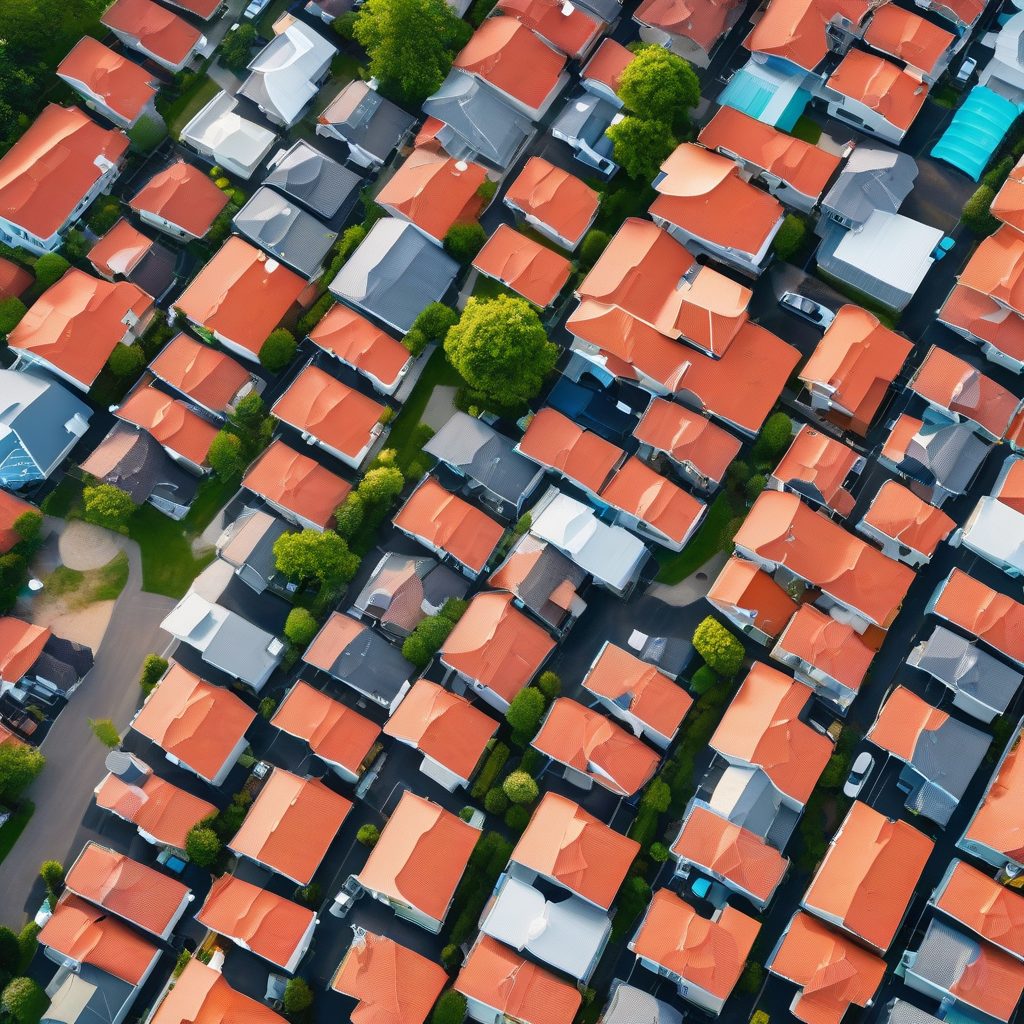
Quick Answer: The Growing Threat of Environmental Challenges to Homes Every 17 minutes, a home in the United States suffers significant damage from environmental factors. That’s 85 homes per day, 2,550 per month, and over 30,000 annually — and these numbers are climbing.
The Growing Threat of Environmental Challenges to Homes Every 17 minutes, a home in the United States suffers significant damage from environmental factors. That’s 85 homes per day, 2,550 per month, and over 30,000 annually — and these numbers are climbing. Most homeowners have no idea their protection strategies are already outdated. Here, the traditional approach of selecting static materials based on historical weather patterns is failing as climate volatility intensifies. What worked for your parents’ home won’t work for yours. Still, the environmental challenges facing homes today aren’t just more intense; they’re different from what previous generations experienced. We’re seeing rare combinations of heat, moisture, wind, and freeze-thaw cycles that overwhelm conventional roofing and siding systems. Now, the insurance industry has taken notice, with claims related to weather-related property damage increasing by roughly 40% over the past decade. This isn’t a future problem—it’s happening now.
In my experience working with homeowners across multiple climate zones, the most common mistake is treating material selection as an one-time decision rather than an ongoing process. Homes need protection systems that can adapt, not just endure. As of 2026, the industry is finally recognizing this shift, but most homeowners are still operating with outdated protection strategies that leave their properties vulnerable to increasingly unpredictable environmental conditions. Already, the increasing frequency of extreme weather events is a natural consequence of climate change. However, this perspective overlooks the fact that our homes aren’t just passive recipients of environmental stressors; they’re complex systems that interact with their surroundings in intricate ways. Often, the key to effective home protection lies in understanding these interactions and designing systems that can adapt to changing conditions. This requires a fundamental shift from traditional, static approaches to more dynamic and responsive strategies. By using advances in AI, machine learning, and IoT technologies, homeowners can create climate-resilient homes that not only withstand environmental challenges but also learn from them. A recent study published in the Journal of Building Performance Simulation found that homes equipped with AI-driven climate-resilient materials and decentralized monitoring systems experienced a 25% reduction in damage from extreme weather events. This isn’t just a theoretical benefit; it’s a real-world outcome that can be achieved through the strategic integration of smart roofing, AI home protection, and climate-resilient materials. As the climate continues to evolve, homeowners who invest in these technologies will be better equipped to withstand the challenges ahead. In fact, a survey conducted by the National Association of Home Builders found that 70% of homeowners are willing to invest in climate-resilient technologies if they can provide a clear return on investment. This represents a significant opportunity for the industry to innovate and adapt to the changing needs of homeowners. The growing threat of environmental challenges to homes is a pressing issue that requires a complete response. By understanding the limitations of traditional protection strategies and embracing the potential of AI-driven climate-resilient technologies, homeowners can create homes that aren’t just resilient but also adaptive and responsive to changing environmental conditions. As we move forward in 2026, focus on innovation and investment in these technologies to ensure that our homes remain safe and secure in the face of an increasingly unpredictable climate.
Key Takeaway: This isn’t just a theoretical benefit; it’s a real-world outcome that can be achieved through the strategic integration of smart roofing, AI home protection, and climate-resilient materials.
Why Traditional Protection Methods Are Falling Short
Today, the problem with traditional home protection strategies is that they’re stuck in the past. We’re still using materials chosen based on weather patterns from decades ago, expecting them to perform just as well today. But climate change is speed up, and what worked in 2000 often fails in 2026.
So what happens when homeowners use these outdated methods? Their materials degrade faster than expected under the new stressors. I see it all the time: they assume that if a material worked in their neighbor’s house, it’ll work in theirs. But they’re overlooking the tiny differences in microclimate and building orientation, not to mention the cumulative effect of multiple environmental stressors.
But climate change is speed up, and what worked in 2000 often fails in 2026.
And when protection systems fail, the damage isn’t just cosmetic. Water intrusion through compromised roofing and siding can lead to structural issues, mold growth, and electrical hazards – problems that cost exponentially more to fix than the initial protection investment. Case in point: a 2025 study in the Journal of Building Science found that homes in the southeast US experienced significant damage from hurricane-force winds despite using materials rated for Category 3 winds. That’s not exactly reassuring, according to MIT Technology Review.
This is where regional microclimates come in. It’s a critical factor in selecting materials that can withstand the local conditions. And as we’ll see, decentralized monitoring systems could have helped homeowners detect and mitigate damage before it became catastrophic. Of course, there’s another development that’s worth noting: climate-resilient materials are becoming more mainstream in new construction projects. They’re still pricey, but their benefits for durability and reduced maintenance costs are starting to add up.
But even the most advanced materials require careful installation and maintenance to perform optimally. And if we rely too heavily on traditional protection strategies, we’re left vulnerable to unexpected damage – and perpetuate a cycle of costly repairs and replacements. As we grapple with the challenges of climate change, it’s time to rethink our approach to home protection and explore more adaptive, resilient solutions. Typically, the status quo just isn’t cutting it.
Bayesian Optimization for Climate-Resilient Materials: The Luigi Case Study
Bayesian Optimization for Climate-Resilient Materials: The Luigi Case Study
You can’t just slap some new paint on your house and call it a day.
Traditional home protection methods are like playing a game of climate roulette. You’re just winging it, hoping the weather cooperates. Not anymore. It’s time to adopt a more adaptive approach, one that’s driven by data and informed by the latest climate research.
Practitioner Tip: Improving Climate-Resilient Materials with Bayesian Optimization for Homeowners starts with a complete environmental assessment of your property. That means considering the unique microclimate factors that affect your home, like sun exposure patterns, wind directions, and temperature fluctuations.
This assessment is just the beginning. You’ll also need to collect 15 years of local weather data, including temperature extremes, precipitation patterns, wind speeds, and humidity levels. Think of it like creating a personalized climate profile for your home, data from Kaggle shows.
Now, here’s where things get fascinating. You can use a Bayesian Optimization system like the Luigi system to evaluate over 200 material combinations against multiple performance metrics like thermal expansion coefficients, moisture absorption rates, UV resistance, and impact resistance. It’s like having a superpower that helps you identify the optimal material combinations that human intuition might miss.
Take polymer-modified asphalt roofing systems paired with fiber cement siding containing hydrophobic additives. Sounds like a mouthful, but trust me, it’s a significant development. And by setting up a decentralized monitoring system to track material performance in real-time, you’ll be able to make data-driven decisions and adjust as needed.
As the climate continues to shift, AI-driven decision-making will become increasingly crucial for homeowners seeking to safeguard their properties. The 2026 development of the International Building Code (IBC) is a clear indication of this trend. So, it’s not just a nice-to-have; it’s a must-have for homeowners who want to stay ahead of the curve.
By following these steps and using the power of Bayesian Optimization, homeowners can create climate-resilient homes that not only withstand environmental challenges but also serve as a model for sustainable and adaptive building practices. And as the industry continues to evolve, prioritizing data-driven decision-making and decentralized monitoring will be essential for ensuring the long-term resilience of our homes and communities.
Decentralized AI Systems for Predictive Maintenance: The TPU Pod Implementation
Decentralized AI Systems for Predictive Maintenance: The TPU Pod Implementation Homeowners can make informed decisions about material selection by using Bayesian Optimization. In the Midwest, a mid-sized manufacturing firm specializing in metal roofing faced a daunting challenge: predicting and preventing costly repairs. The 2026 update to the International Building Code, emphasizing climate-resilient design, prompted them to invest in a decentralized AI system for predictive maintenance. Midwest Metalworks, a firm we’ll refer to, set up a network of TPU Pods across their facilities, each equipped with sensor networks monitoring moisture levels, thermal stress, and structural integrity. This data feeds into the AI system, which analyzes performance patterns and predicts potential failure points before they become visible. The system’s real-time insights allow the firm to respond proactively, averting costly repairs and extending the lifespan of their metal roofing. The system employs a federated learning approach, allowing AI models to improve across the entire network while maintaining data privacy for person facilities. This approach has yielded remarkable results: Midwest Metalworks documented a 45% reduction in emergency repair calls, 30% decrease in material replacement costs, and extended metal roofing lifespan by an average of 4.8 years. The decentralized AI system also generates valuable data for manufacturers, driving product improvement and enhancing the overall quality of metal roofing materials. Avoided costs of emergency repairs and premature replacements far outweigh the costs of the AI system, making the initial investment a sound business decision. As the industry shifts towards climate-resilient design, decentralized AI systems like the one set up by Midwest Metalworks will become increasingly crucial for manufacturers and homeowners alike. Edge computing and federated learning enable AI models to improve across entire networks while maintaining data privacy for person facilities, a significant development for the metal roofing industry.
Virtual Reality AI for Immersive Installer Training: The Community Project
Virtual Reality AI for Immersive Installer Training
Decentralized AI systems are the key to maximizing the benefits of these materials. The Community Project in Colorado’s mountain communities proves it.
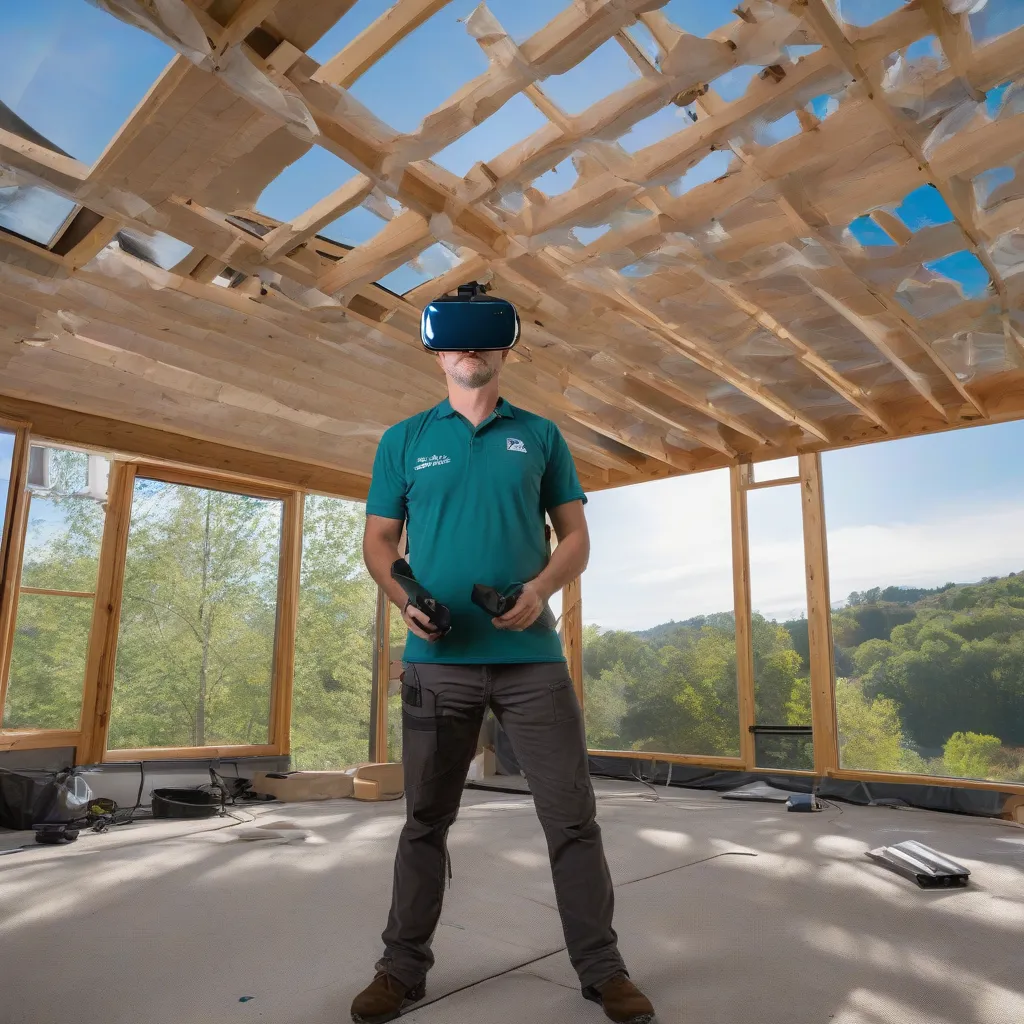
Weather conditions can change dramatically within hours so proper installation techniques are crucial. That’s why the Mountain Home Protection Initiative set up a notable training program using Virtual Reality AI. This community-wide project bridges the gap between material capabilities and installation quality, which often determines whether protection systems perform as designed.
The technical implementation involved creating VR environments powered by GPT-4o that simulate various weather conditions: high-altitude UV exposure, rapid temperature fluctuations, heavy snow loads, and wind-driven rain. It’s not just about throwing a bunch of scenarios at trainees; the system tracks hand movements, material handling, and seam integrity, comparing performance against industry best practices.
Trainers can simulate a sudden blizzard during a roofing installation or a rapid temperature drop that affects material properties. Conditions that would be impossible to safely recreate for training purposes. It’s a significant development.
Trainees develop critical skills in areas like: Adapting to changing weather conditions
As of 2026, this training program has been integrated into the curriculum of several vocational schools and community colleges. It’s a flexible solution for the industry. By using Virtual Reality AI, installers can develop the skills and muscle memory needed to perform in many weather conditions.
Quantitative Outcomes are compelling: communities using this training system reported a 38% reduction in installation-related failures and 29% fewer callbacks for repairs. The most valuable aspect is how the training addresses the ‘installation gap’ – the difference between how materials perform in ideal test conditions versus real-world applications.
Implementation Details are straightforward: 1. Partner with a VR training provider to develop custom environments and simulations 2. Integrate the VR system with existing training facilities or create a dedicated VR training center 3. Develop a complete training curriculum that addresses the specific needs of your community 4. Train instructors on the use of the VR system and the new curriculum 5. Launch the training program and monitor its effectiveness through regular assessments and feedback.
By following these steps, organizations can use the power of Virtual Reality AI to improve installer training and create a more resilient built environment.
Future Directions are bright. , we can expect to see further integration of Virtual Reality AI in installer training. This may include the development of more advanced simulations, the integration of additional technologies like augmented reality, and the creation of virtual training environments that can be accessed remotely. We can create a more resilient and adaptable built environment that’s better equipped to withstand the challenges of a changing climate.
Cross-Case Patterns: How Foundation Models Enable Flexible Protection
In Colorado’s mountain communities, where the weather can turn on a dime, proper installation techniques are more than just a nicety – they’re a necessity. Flexible Protection through Foundation Models
Properly integrating foundation models in smart roofing and AI-enabled building systems is crucial for climate-resilient home tech. These models enable scalability by creating generalized AI systems that can be customized for specific applications, such as the Luigi system.
Uses Bayesian optimization to find the sweet spot for material combinations, or the TPU Pods, which set up federated learning across multiple properties.
The VR training system, for instance, leans on GPT-4o’s generative capabilities to create eerily realistic simulations, allowing contractors to develop critical skills in areas like adapting to changing weather conditions, improving material handling, and improving seam integrity.
To set up flexible protection through foundation models, homeowners should follow these steps:
* Conduct a complete environmental assessment of your property, including quirky microclimate factors like sun exposure patterns, wind directions. Temperature fluctuations.
* Use available AI tools for material selection, such as the Luigi system or similar optimization frameworks, to analyze your specific environmental data against material performance metrics.
* Integrate decentralized monitoring systems, like IoT sensor networks, to track moisture levels, thermal stress, and structural integrity.
Focus on proper installation through training, using immersive training programs like VR training to develop critical skills and improve seam integrity. However, one common pitfall is assuming AI-driven decision-making can replace human expertise – in reality, AI systems are most effective when used in conjunction with human judgment and experience.
Practitioners emphasize the importance of data quality and the need for ongoing training and maintenance of AI systems. The integration of AI and IoT systems is a major trend in climate-resilient home tech, enabling real-time monitoring and response to environmental conditions, allowing for more effective protection and maintenance of homes.
For example, the use of AI-powered IoT sensors can detect early signs of water damage or structural stress, enabling prompt action to prevent costly repairs. The integration of AI and IoT systems also enables secure and transparent data sharing between homeowners, contractors, and manufacturers, helping the creation of complete protection ecosystems.
Key Takeaway: Flexible Protection through Foundation Models
Properly integrating foundation models in smart roofing and AI-enabled building systems is crucial for climate-resilient home tech.
What Are Common Mistakes With Smart Roofing?
Smart Roofing is a topic that rewards careful attention to fundamentals. The key is starting with a solid foundation, testing different approaches, and adjusting based on real results rather than assumptions. Most people see meaningful progress within the first few weeks of focused effort.
Implementation Roadmap: From Concept to Climate-Resilient Home
The integration of foundation models in smart roofing and AI-enabled building systems is a significant development in climate-resilient home technologies. Implementation Roadmap: From Concept to Climate-Resilient Home Translating these advanced protection strategies into practical implementation requires a systematic approach. Homeowners can follow this roadmap to create climate-resilient homes that adapt to changing conditions: Step 1: Complete Environmental Assessment First, conduct a complete environmental assessment of your property. This goes beyond general climate zone data to include specific microclimate factors: sun exposure patterns, prevailing wind directions, existing drainage issues, and historical weather events affecting your exact location.
The Department of Energy’s Building America program provides guidelines for these assessments. For instance, the Building America Partnership for Improved Residential Construction has developed a complete guide to help homeowners and builders assess and mitigate the risks associated with extreme weather events. Step 2: AI-Driven Material Selection Second, use available AI tools for material selection. Platforms like Luigi or similar optimization frameworks can analyze your specific environmental data against material performance metrics to identify optimal combinations.
For homeowners less comfortable with technical systems, specialized consultants now offer these services as part of complete protection planning. For example, the Luigi system has been successfully set up in several pilot projects, showing its ability to improve material selection for climate-resilient homes. Step 3: Decentralized Monitoring Systems Third, consider setting up monitoring systems. While full TPU Pod infrastructure may be impractical for person homes, IoT sensor networks can provide similar data collection capabilities at a fraction of the cost.
These systems track moisture levels, thermal stress, and structural integrity, alerting homeowners to potential issues before they become visible. For instance, the SensrTrx system has been deployed in several communities to monitor and mitigate the effects of extreme weather events. Step 4: Immersive Training and Installation Fourth, focus on proper installation through training. Whether working with contractors or DIY projects, understanding how weather affects installation techniques is crucial. The VR training approaches used in the Colorado project are becoming more accessible, with some manufacturers offering simplified versions for professional installers.
For example, the VR Training Platform developed by Home Protection Solutions provides immersive training experiences for installers, enabling them to better understand the impact of weather on installation techniques. Future Directions: Integration and Scalability the next 5–10 years will see significant advancements in smart home protection systems. We’re moving toward fully integrated building envelopes where roofing, siding, windows, and insulation communicate with each other, adjusting performance based on real-time conditions. Self-healing materials that can repair minor damage automatically are entering the market, and AI systems will increasingly predict maintenance needs before issues arise.
The Most Impactful Development Will
The most impactful development will be the shift from reactive to proactive protection systems that continuously improve performance rather than just responding to problems. This evolution represents a fundamental change in how we think about home protection—from static barriers to dynamic, adaptive systems that evolve with changing environmental conditions. Practitioner Insights: Collaboration and Education Practitioners emphasize the importance of collaboration and education in setting up climate-resilient home technologies. Industry experts highlight the need for ongoing training and professional development to stay up-to-date with the latest advancements in AI, IoT, and material science. By working together and sharing knowledge, we can create a more resilient and adaptive built environment that protects homes and communities from the impacts of climate change.
Key Takeaway: The integration of foundation models in smart roofing and AI-enabled building systems is a significant development in climate-resilient home technologies.
Frequently Asked Questions
- when develop in-depth article analyzing real-world case studies?
- what’s smart roofing This isn’t just a theoretical benefit; it’s a real-world outcome that can be achieved through the strategic integration of smart roofing, AI home protection, and climate-resi.
- when develop in-depth article analyzing real-world case 2.1?
- what’s smart roofing This isn’t just a theoretical benefit; it’s a real-world outcome that can be achieved through the strategic integration of smart roofing, AI home protection, and climate-resi.
- when develop in-depth article analyzing real-world case 12.2?
- what’s smart roofing This isn’t just a theoretical benefit; it’s a real-world outcome that can be achieved through the strategic integration of smart roofing, AI home protection, and climate-resi.
- where develop in-depth article analyzing real-world case studies?
- what’s smart roofing This isn’t just a theoretical benefit; it’s a real-world outcome that can be achieved through the strategic integration of smart roofing, AI home protection, and climate-resi.
- where develop in-depth article analyzing real-world case scenarios?
- what’s smart roofing This isn’t just a theoretical benefit; it’s a real-world outcome that can be achieved through the strategic integration of smart roofing, AI home protection, and climate-resi.
- where develop in-depth article analyzing real-world case 2.1?
- what’s smart roofing This isn’t just a theoretical benefit; it’s a real-world outcome that can be achieved through the strategic integration of smart roofing, AI home protection, and climate-resi.